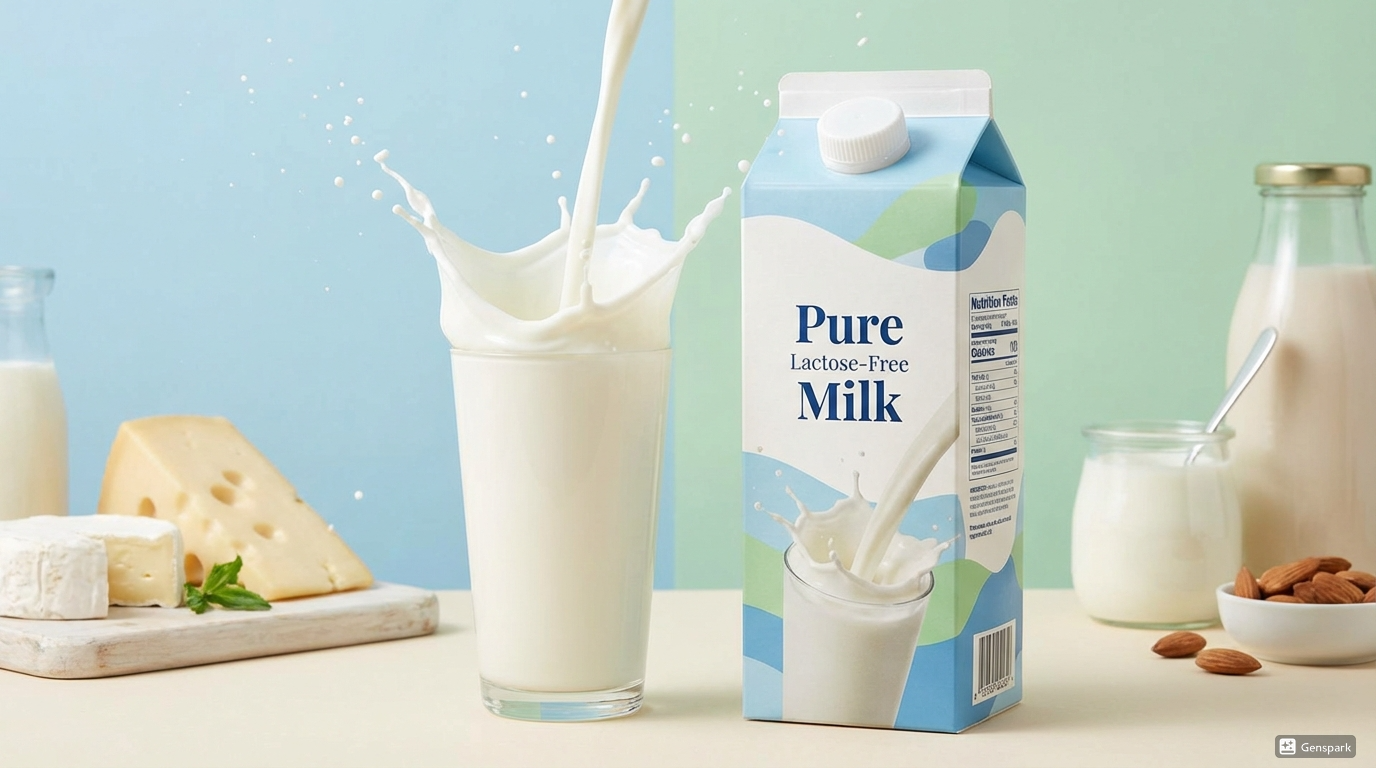
The Complete Guide to Lactose Free Milk: Everything You Need to Know in 2026
Your journey to enjoying dairy without the discomfort starts here
🥛 Introduction: The Dairy Dilemma That Affects Millions
Picture this: You’re at your favorite coffee shop, ordering your morning latte. But there’s that familiar hesitation. Should I risk it? That bloating, the cramping, the embarrassing digestive drama that follows every dairy indulgence.
You’re not alone.
About 68% of the world’s population experiences some level of lactose malabsorption. That’s roughly 5 billion people navigating a world where dairy is everywhere – from breakfast cereals to birthday cakes, from protein shakes to comfort food classics.
But here’s the good news: lactose-free milk has revolutionized how we think about dairy consumption. It’s not a compromise anymore; it’s a complete solution that delivers all the nutrition of regular milk without any of the digestive distress.
This comprehensive guide will walk you through everything you need to know about lactose-free milk in 2026 – from the science behind it to practical shopping tips, nutritional comparisons, and answers to every question you’ve ever had about this dairy game-changer.
🔬 What Exactly Is Lactose Free Milk?
Let’s clear up a common misconception right away: lactose free milk is real milk. It’s not a plant-based alternative, not a synthetic substitute, and definitely not “fake dairy.”
Lactose free milk starts as 100% regular cow’s milk. The magic happens during processing, when manufacturers add an enzyme called lactase to the milk. This enzyme breaks down lactose – the natural sugar found in dairy – into two simpler sugars: glucose and galactose.
Think of it like pre-digestion. Your body would normally produce lactase in the small intestine to break down lactose. But for the 30 to 50 million Americans who are lactose intolerant, that enzyme production drops significantly or stops altogether. Lactose-free milk simply does that work for you.
The Science Behind the Solution
The process is surprisingly elegant. When lactase is added to milk, it cleaves the lactose molecule at its chemical bond. The result? A product that’s molecularly identical to what your body would create naturally – if it could.
This is why lactose-free milk tastes slightly sweeter than regular milk. Glucose and galactose are perceived as sweeter on your taste buds than the lactose molecule they came from. It’s not added sugar; it’s just how your palate interprets simple sugars versus complex ones.
💪 Nutritional Powerhouse: The Benefits You Can’t Ignore
Here’s where lactose-free milk truly shines: it’s nutritionally identical to regular milk.
That bears repeating. When you choose lactose-free milk, you’re not sacrificing a single vitamin, mineral, or gram of protein. According to nutrition experts and recent studies, lactose-free milk provides:
Complete Nutrient Profile
- 8 grams of high-quality protein per cup (essential for muscle repair and satiety)
- 25% of your daily calcium requirement (critical for bone density at every age)
- Vitamin D for calcium absorption and immune function
- Vitamin B12 for energy metabolism and nervous system health
- Riboflavin (B2) for cellular energy production
- Phosphorus for bone health and pH balance
- Potassium for blood pressure regulation and heart health
- Vitamin A for vision and immune system support
All of this in just 90 calories per cup if you choose skim, or 150 calories for whole milk. Healthline
Why This Matters
Many people who avoid regular milk due to lactose intolerance miss out on dairy’s nutritional benefits. They turn to supplements or fortified alternatives that might not provide the same bioavailability.
Lactose-free milk solves this elegantly. The calcium in dairy is more readily absorbed by your body compared to many plant-based alternatives. The protein is complete, containing all nine essential amino acids. And the vitamin D naturally present helps your body utilize that calcium effectively. Mayo Clinic Health System
🆚 Lactose Free Milk vs. Regular Milk: The Real Differences
The differences are surprisingly minimal, but they’re worth understanding:
Taste
Regular milk has a neutral, slightly sweet flavor. Lactose free milk tastes noticeably sweeter because those broken-down simple sugars hit your taste receptors more directly. Some describe it as having a “candy-like” quality, though this varies by brand.
It’s not overwhelming, though. Most people adjust within a few days and find they actually prefer the taste.
Digestion
This is the obvious one. Regular milk can cause bloating, gas, cramping, and diarrhea in lactose-intolerant individuals within 30 minutes to 2 hours of consumption.
Lactose free milk? Zero digestive issues for those with lactose intolerance. Your body treats it like any other easily digestible food.
Nutritional Content
Identical. Period. The carbohydrate count is the same because lactose, glucose, and galactose all have the same caloric value. The fat, protein, vitamins, and minerals remain completely unchanged. CDHF
Price
Lactose free milk typically costs 20-30% more than regular milk due to the additional processing step. However, many consumers find the price difference worthwhile given the comfort and convenience it provides.
Shelf Life
Many lactose-free products undergo ultra-high temperature (UHT) pasteurization, giving them a longer shelf life before opening. Some brands can last up to 6 months unopened at room temperature.
🛒 Choosing the Right Lactose Free Milk: A Buyer’s Guide
The lactose-free milk market has exploded in recent years. Major brands now include:
- LACTAID® (industry leader)
- Fairlife (ultra-filtered option)
- Organic Valley
- Natrel
- Oak Farms
- Maola
- Store brands (Walmart, Target, Kroger all offer quality options)
What to Look For
1. Fat Content: Lactose free milk comes in skim (fat-free), 1%, 2%, and whole varieties. Choose based on your dietary needs and taste preferences.
2. Fortification: While all retain natural vitamins, some brands add extra vitamin D or omega-3 fatty acids.
3. Organic Options: If you prefer organic dairy, several brands offer certified organic lactose-free milk.
4. Ultra-Filtered vs. Standard: Ultra-filtered lactose-free milk (like Fairlife) removes some water, concentrating protein and calcium while reducing sugar. It has more protein per serving but costs more.
5. Packaging: Look for opaque or light-blocking containers. Milk exposed to light can lose riboflavin and develop off-flavors.
🌍 Who Should Drink Lactose Free Milk?
Obviously: People with Lactose Intolerance
If you experience digestive symptoms after consuming dairy, you’re a prime candidate. Lactose intolerance is particularly common among:
- 70-100% of East Asian populations
- 80% of African Americans
- 80% of Native Americans
- 50-80% of Hispanic Americans
- About 20% of Caucasian Americans
These statistics from recent research show how widespread this condition truly is. Medscape
But Also: People Without Lactose Intolerance
You don’t need to be lactose intolerant to enjoy lactose free milk. Some benefits for everyone include:
Easier Digestion: Even if you’re not intolerant, lactose free milk is gentler on your digestive system, especially as we naturally produce less lactase with age.
Better for Sensitive Stomachs: People with irritable bowel syndrome (IBS) or other digestive sensitivities often find lactose free milk more comfortable.
Post-Surgery Recovery: After certain gastrointestinal procedures, doctors may recommend lactose-free options during healing.
Aging Population: Lactase production naturally decreases with age. Many older adults who handled dairy fine in their youth develop sensitivities later.
🍳 Cooking and Baking with Lactose Free Milk
Here’s fantastic news: lactose free milk works exactly like regular milk in recipes.
No conversions needed. No adjustments necessary. If a recipe calls for 1 cup of milk, use 1 cup of lactose free milk. The results are virtually indistinguishable.
Perfect Applications
Baking: Cakes, muffins, pancakes, waffles, bread – all turn out beautifully. The slight sweetness can actually enhance baked goods.
Cooking: Cream sauces, soups, gratins, mashed potatoes, and creamy pasta dishes work perfectly.
Beverages: Coffee, tea, smoothies, protein shakes, and hot chocolate all taste great.
Breakfast: Cereal, oatmeal, overnight oats, and chia pudding are excellent ways to use lactose-free milk.
The only minor consideration: because of the perceived sweetness, you might reduce sugar slightly in very sweet recipes. But honestly? Most people don’t bother, and everything turns out great anyway.
⚠️ Potential Considerations and Side Effects
While lactose free milk is safe for most people, here are a few things to know:
It’s NOT for Milk Allergies
This is crucial. Lactose intolerance and milk allergy are completely different conditions.
- Lactose intolerance is a digestive issue caused by insufficient lactase enzyme
- Milk allergy is an immune system response to milk proteins (casein and whey)
Lactose free milk still contains all the proteins found in regular milk. If you have a true milk allergy, lactose free milk will trigger the same allergic reaction as regular milk. You need genuinely dairy-free alternatives like almond, soy, or oat milk.
Guar Gum Sensitivity
Some brands add guar gum as a stabilizer. A small percentage of people are sensitive to this additive and may experience digestive discomfort. If you notice issues, try brands without added stabilizers.
Blood Sugar Considerations
While the total carbohydrate content is identical to regular milk, some diabetics report slightly higher blood sugar responses to lactose free milk because simple sugars absorb more quickly than complex ones. If you have diabetes, monitor your blood sugar when introducing lactose free milk and consult your healthcare provider.
Cost Factor
At 20-30% more expensive than regular milk, lactose-free options may not fit every budget. Store brands often offer more affordable options than name brands.
🌱 Lactose Free Milk vs. Plant-Based Alternatives
Many people confuse lactose free milk with dairy alternatives. Let’s clarify the key differences:
Protein Content
- Lactose free milk: 8g per cup (complete protein)
- Soy milk: 7-8g per cup (complete protein)
- Almond milk: 1g per cup (incomplete protein)
- Oat milk: 3g per cup (incomplete protein)
- Coconut milk: <1g per cup (incomplete protein)
Calcium
Lactose free milk provides naturally occurring calcium with high bioavailability. Plant milks must be fortified, and that calcium may not absorb as efficiently.
Taste and Texture
Lactose free milk has the creamy mouthfeel and neutral taste of dairy. Plant milks have distinct flavors that may not work in all applications.
Environmental Considerations
Plant milks generally have a lower environmental footprint than dairy. If environmental impact is your primary concern, plant-based options may align better with your values.
The Bottom Line
If you can tolerate dairy and want maximum nutrition, lactose free milk is superior. If you’re vegan, have ethical concerns about dairy, or have a milk allergy, plant-based alternatives are the right choice.
💡 Expert Tips for Making the Switch
Transitioning to lactose free milk? Here’s how to make it seamless:
1. Start Gradually: Mix lactose-free with your regular milk if you’re concerned about the taste difference. Gradually increase the ratio over a week.
2. Try Different Brands: Taste varies by brand. Don’t give up if the first one you try isn’t perfect.
3. Match Your Fat Preference: If you drink whole milk, choose whole lactose-free milk. The fat content significantly affects taste and satisfaction.
4. Store Properly: Once opened, lactose-free milk lasts about the same time as regular milk (5-7 days). Keep it cold and sealed.
5. Check Expiration Dates: UHT lactose-free milk can last months unopened, but once opened, treat it like regular milk.
6. Don’t Forget Other Dairy: Lactose free cheese, yogurt, ice cream, and cream cheese are also available if you want to go completely lactose-free.
📊 The Future of Lactose-Free Dairy
The lactose-free dairy market is experiencing remarkable growth. Market research projects continued expansion through 2030 as awareness increases and products improve.
Emerging Trends
Better Taste: New processing techniques are reducing the “sweet” taste that some consumers find off-putting.
More Variety: Beyond milk, we’re seeing expansion in lactose-free butter, cream, protein powders, and specialty cheeses.
Functional Additions: Brands are adding probiotics, prebiotics, omega-3s, and extra protein to lactose-free products.
Sustainability Focus: Lactose-free organic and grass-fed options are becoming more widely available.
Global Accessibility: As lactose intolerance awareness grows internationally, lactose-free products are reaching more markets worldwide.
✅ The Bottom Line: Is Lactose Free Milk Worth It?
For the millions of people who experience digestive discomfort from regular dairy, lactose free milk is absolutely life-changing.
It provides:
- ✓ All the nutrition of regular milk
- ✓ Zero digestive discomfort for lactose-intolerant individuals
- ✓ Complete versatility in cooking and baking
- ✓ High-quality protein and essential nutrients
- ✓ Easier digestion even for those without diagnosed intolerance
The slightly higher price and sweeter taste are minor considerations compared to the comfort and nutritional benefits it provides.
Whether you’re definitely lactose intolerant, suspect you might be, or simply want easier-to-digest dairy, lactose free milk deserves a place in your refrigerator.
❓ 10 Frequently Asked Questions About Lactose Free Milk
1. Does lactose free milk have the same nutritional value as regular milk?
Yes, absolutely. This is one of the most important things to understand about lactose free milk. The nutritional composition remains identical to regular milk because the only change is the breakdown of lactose into glucose and galactose – a transformation that doesn’t affect any other nutrients.
You’ll still get 8 grams of complete protein per cup, which contains all nine essential amino acids your body needs for muscle maintenance, immune function, and cellular repair. The calcium content remains at approximately 300mg per cup, providing about 25% of your daily requirement. This calcium is particularly valuable because dairy calcium has higher bioavailability than calcium from plant sources or supplements.
All the vitamins persist unchanged: vitamin D for calcium absorption and immune function, vitamin B12 for energy metabolism and nervous system health, riboflavin for cellular energy production, and vitamin A for vision and immune support. The mineral profile – including phosphorus, potassium, zinc, and selenium – stays exactly the same.
The caloric content is identical too. Whether you choose skim (90 calories), 1% (110 calories), 2% (130 calories), or whole (150 calories) lactose-free milk, the calorie count matches its regular milk equivalent precisely. This makes lactose-free milk an excellent option for people who need the nutritional benefits of dairy without the digestive consequences. Green Valley Lactose Free
2. Can people who are not lactose intolerant drink lactose free milk?
Absolutely, and many people without diagnosed lactose intolerance choose lactose free milk for various reasons. There’s no harm whatsoever in drinking lactose-free milk if you can tolerate regular milk just fine.
Some people find lactose free milk simply easier to digest, even without a formal intolerance diagnosis. As we age, our bodies naturally produce less lactase enzyme. You might not have full-blown lactose intolerance, but you may notice mild discomfort after consuming large amounts of dairy. Lactose free milk eliminates this concern entirely.
People with irritable bowel syndrome (IBS) often find lactose-free milk gentler on their digestive systems, even if lactose isn’t their primary trigger. The same applies to individuals recovering from gastrointestinal illnesses or surgeries – doctors frequently recommend lactose-free options during the healing process.
Some athletes and fitness enthusiasts prefer lactose free milk because it’s easier on their stomachs before or after workouts. When your body is directing blood flow to working muscles, digestion can become more challenging, and lactose-free milk provides complete nutrition without digestive stress.
Parents sometimes choose lactose-free milk for children with sensitive stomachs or finicky eating habits, as the slightly sweeter taste can be more appealing to young palates. There’s no medical reason to avoid it, and the nutritional benefits remain complete. The only downside is the higher cost compared to regular milk, but if your budget allows and you prefer it, there’s absolutely no reason not to drink lactose-free milk even without lactose intolerance.
3. Why does lactose free milk taste sweeter than regular milk?
This is a fascinating example of how food chemistry affects taste perception. Lactose free milk tastes sweeter not because sugar is added, but because of how your taste buds perceive different types of sugars.
In regular milk, lactose is a disaccharide – a complex sugar made of two simple sugars (glucose and galactose) bonded together. Your taste receptors don’t perceive lactose as particularly sweet because that complex molecule doesn’t bind efficiently to your sweet taste receptors.
When the lactase enzyme is added during the production of lactose free milk, it cleaves that bond, separating lactose into its two component sugars: glucose and galactose. These are monosaccharides – simple sugars that interact much more readily with the sweet taste receptors on your tongue.
Think of it like this: lactose is like a locked door that your taste buds can’t fully open. Glucose and galactose are like open doors that your sweet receptors can easily access. The total amount of sugar hasn’t changed at all – it’s the same molecules, just in a different form. But your perception changes dramatically.
This is why lactose free milk often tastes noticeably sweeter, especially if you drink them side by side. Some people love this sweeter taste; others find it takes getting used to. Most consumers report that within a few days of regular consumption, they adjust completely and even come to prefer the taste. In baking, this subtle sweetness can actually enhance recipes, though some bakers choose to reduce added sugar slightly in very sweet applications. The “sweetness” is entirely natural and comes from the milk’s original sugar content – just presented in a form your taste buds recognize more readily.
4. How long does lactose free milk last after opening?
The shelf life of lactose free milk after opening depends on the processing method used, but in most cases, it’s similar to regular milk – about 5 to 7 days when stored properly in the refrigerator.
However, there’s an important distinction to understand. Many lactose-free milk products undergo ultra-high temperature (UHT) pasteurization, which heats the milk to about 280°F for 2-4 seconds. This process kills virtually all bacteria and gives the product an incredibly long shelf life before opening – often 6-9 months at room temperature.
But here’s the key: once you open UHT lactose free milk, that extended shelf life advantage disappears. Exposure to air reintroduces bacteria, and from that point forward, it behaves like regular milk. You need to refrigerate it immediately and consume it within about a week.
Some lactose free milk undergoes standard pasteurization instead of UHT. This product must be refrigerated from production and has a shorter initial shelf life (usually 2-3 weeks before opening), but after opening, the timeframe is the same – about 5-7 days.
To maximize freshness after opening:
- Keep lactose free milk refrigerated at 38-40°F at all times
- Always seal the container tightly after pouring
- Don’t leave it out on the counter for extended periods
- Never drink directly from the container, as this introduces bacteria
- Store it on an interior refrigerator shelf, not the door (temperature is more stable)
- Trust your senses – if it smells sour or has an off taste, discard it regardless of the date
The “best by” date on the carton applies to unopened milk. Once opened, use the 5-7 day guideline regardless of what that date says.
5. Is lactose free milk suitable for people with milk allergies?
No, absolutely not. This is a critical distinction that can have serious health consequences if misunderstood.
Lactose intolerance and milk allergy are completely different conditions:
Lactose intolerance is a digestive issue. Your small intestine doesn’t produce enough lactase enzyme to break down lactose, the sugar in milk. When undigested lactose reaches your colon, bacteria ferment it, causing gas, bloating, cramping, and diarrhea. It’s uncomfortable but not dangerous.
Milk allergy is an immune system response to milk proteins – primarily casein and whey. Your immune system mistakenly identifies these proteins as threats and launches an attack. This can cause hives, wheezing, vomiting, anaphylaxis, and other allergic reactions that can be life-threatening.
Lactose-free milk only removes the problematic sugar (lactose). All the proteins remain completely intact. If you’re allergic to milk proteins, lactose-free milk will trigger exactly the same allergic reaction as regular milk.
People with milk allergies must avoid all dairy products, including lactose-free milk, cheese, yogurt, butter, and anything containing milk proteins. They need truly dairy-free alternatives like:
- Almond milk
- Soy milk
- Oat milk
- Coconut milk
- Rice milk
- Cashew milk
- Pea protein milk
Always read labels carefully. Milk proteins hide in unexpected places under names like casein, whey, caseinates, lactalbumin, and lactoglobulin. If you or your child has a diagnosed milk allergy, consult with an allergist and possibly a registered dietitian to ensure proper nutrition while completely avoiding dairy proteins. Lactose-free milk is not a safe alternative for milk allergy sufferers.
6. Can lactose free milk help with weight loss?
Lactose-free milk can be part of a successful weight loss plan, but it’s not inherently a “weight loss food.” Its role in weight management depends on how you use it and which variety you choose.
From a caloric standpoint, lactose-free milk is identical to regular milk:
- Skim lactose-free milk: ~90 calories per cup
- 1% lactose-free milk: ~110 calories per cup
- 2% lactose-free milk: ~130 calories per cup
- Whole lactose-free milk: ~150 calories per cup
The protein content (8 grams per cup) is particularly valuable for weight loss. Protein increases satiety, meaning you feel fuller longer after consuming it. This can help reduce overall calorie intake throughout the day. Protein also has a higher thermic effect than carbohydrates or fat, meaning your body burns more calories digesting and processing it.
The calcium in lactose-free milk may also play a role in weight management. Some research suggests adequate calcium intake supports fat metabolism and may help prevent fat storage, though this effect is modest and shouldn’t be overstated.
Where lactose-free milk can sabotage weight loss efforts:
- Replacing lower-calorie alternatives: If you switch from unsweetened almond milk (30-40 calories per cup) to lactose-free milk (90-150 calories), you’re adding calories
- Adding it to high-calorie beverages: Lattes, smoothies, and protein shakes can quickly become calorie bombs if you’re not mindful of portions
- Drinking it instead of eating: Liquid calories don’t trigger satiety signals as effectively as solid food
For weight loss, choose skim or 1% lactose-free milk, measure your portions, and count those calories toward your daily total. Use it strategically in high-protein breakfasts or post-workout recovery drinks where the nutrition supports your goals. But remember: no single food causes weight loss. It’s always about total caloric intake versus expenditure.
7. Does lactose-free milk contain any added sugars?
This question comes up frequently because of the sweeter taste of lactose-free milk, but the answer is reassuring: no added sugars are present in plain, unflavored lactose-free milk.
The confusion is completely understandable. When you look at the Nutrition Facts panel on lactose-free milk, you’ll see the “Total Sugars” line shows approximately 12 grams per cup – exactly the same as regular milk. Some newer labels break this down further, showing “Added Sugars: 0g.”
That 12 grams represents the naturally occurring milk sugar – it was lactose in regular milk, and it’s now glucose and galactose in lactose-free milk. The total amount hasn’t changed; only the form has. Think of it like ice melting into water – the H₂O molecules are the same, just in a different state.
The sweeter taste comes entirely from how your taste receptors perceive simple sugars (glucose and galactose) versus complex sugars (lactose). No sweeteners are added during processing.
However, there’s an important caveat: flavored lactose-free milk often does contain added sugars. Chocolate, strawberry, vanilla, or other flavored varieties typically have significant added sugar to create those flavor profiles, just like flavored regular milk does. Always check the label if you’re watching sugar intake.
Some specialty ultra-filtered lactose-free milks actually have less total sugar than regular milk because the filtration process removes some of the natural sugar along with water. These products highlight “reduced sugar” on the label and typically contain 6-8 grams of total sugar per cup instead of 12.
For people with diabetes or those monitoring blood sugar, it’s worth noting that while the total carbohydrate content is identical to regular milk, some individuals report slightly faster blood sugar responses to lactose-free milk because simple sugars are absorbed more quickly than complex ones. Monitor your individual response and discuss any concerns with your healthcare provider.
8. Can you use lactose-free milk in coffee and tea?
Yes, absolutely! Lactose-free milk works beautifully in coffee and tea, and many people actually prefer it because of its naturally sweeter taste, which can reduce the need for added sweeteners.
All varieties of lactose-free milk work well:
Whole lactose-free milk creates rich, creamy coffee drinks like lattes, cappuccinos, and flat whites. The higher fat content produces luxurious foam and mouthfeel nearly identical to regular whole milk. Baristas often note that lactose-free whole milk froths beautifully for latte art.
2% lactose-free milk offers a middle ground – creamy enough for satisfaction but with fewer calories than whole milk. It’s the most popular choice for everyday coffee drinking.
1% and skim lactose-free milk work fine but produce thinner texture and less rich flavor. If you’re used to these varieties in your coffee, you won’t notice any difference with the lactose-free versions.
The slight sweetness of lactose-free milk is actually an advantage for many coffee and tea drinkers. That natural sweetness can eliminate or reduce the need for added sugar, honey, or artificial sweeteners. A splash of lactose-free milk in black coffee provides just enough sweetness to round out bitter notes without overwhelming the coffee’s flavor profile.
For tea lovers, lactose-free milk works particularly well in chai, English breakfast, and other robust teas that traditionally pair with milk. The sweetness complements spiced teas beautifully.
Cold brew and iced coffee also work perfectly with lactose-free milk. It doesn’t curdle or separate, and it blends smoothly into cold beverages.
The only consideration is that lactose-free milk may not perform identically in extremely hot preparations (like steaming to 180°F for cappuccinos) compared to regular milk, but the differences are minimal and most people don’t notice any issue. Professional baristas who work extensively with various milk types report that lactose-free milk is one of the easiest alternatives to work with – far more cooperative than many plant-based options.
If you’re someone who avoids your beloved latte because regular milk bothers your stomach, lactose-free milk is an absolute game-changer. You can finally enjoy your coffee shop favorites without digestive consequences.
9. What’s the difference between lactose-free milk and ultra-filtered milk?
These are two different processing methods that can sometimes overlap, which creates understandable confusion. Let’s break down each one:
Lactose-free milk is made by adding the lactase enzyme to regular milk, which breaks down lactose (milk sugar) into glucose and galactose. The nutritional profile remains identical to regular milk – same protein, same fat, same vitamins and minerals, same calories. The primary purpose is making milk digestible for people with lactose intolerance.
Ultra-filtered milk (brands like Fairlife, Core Power, and Slate) uses a special filtration process that separates milk into its five components: water, lactose, protein, fat, and minerals. Manufacturers then recombine these components in different ratios. Typically, ultra-filtered milk has:
- More protein (13g vs. 8g per cup)
- More calcium (about 50% more than regular milk)
- Less sugar (6g vs. 12g per cup)
- Same or fewer calories
- Creamier texture
Many ultra-filtered milks are also lactose-free because the filtration process removes much of the lactose, and any remaining lactose is broken down with lactase enzyme. So you can have milk that’s both ultra-filtered AND lactose-free – like Fairlife products.
But not all lactose-free milk is ultra-filtered. Brands like LACTAID use the enzyme addition method without filtration, maintaining the original milk composition.
Which should you choose?
If your primary goal is avoiding lactose, regular lactose-free milk is perfect and usually less expensive. If you want extra protein for muscle building, satiety, or athletic recovery, ultra-filtered options are excellent. If you’re watching sugar intake, ultra-filtered milk’s reduced sugar content may be advantageous.
Both are nutritionally superior to plant-based alternatives if you can tolerate dairy proteins. The decision ultimately comes down to your specific nutritional goals and budget, as ultra-filtered products typically cost 30-50% more than standard lactose-free milk.
10. How is lactose-free milk made, and is it natural?
Understanding the production process helps demystify lactose-free milk and addresses concerns about whether it’s “natural” or “processed.”
Here’s exactly how lactose-free milk is made:
Step 1: Standard Processing
Lactose-free milk starts as regular cow’s milk, which undergoes normal dairy processing – collection from farms, filtration to remove debris, homogenization to break down fat particles, and pasteurization to kill harmful bacteria.
Step 2: Lactase Addition
This is where lactose-free milk diverges. Manufacturers add the enzyme lactase to the milk. Lactase is the same enzyme your small intestine naturally produces to digest lactose. For lactose-free milk production, this enzyme is typically derived from yeast or fungal sources and is considered “generally recognized as safe” (GRAS) by the FDA.
Step 3: Holding Period
The milk is held at carefully controlled temperatures (usually refrigerated) for a specific period – typically 24 hours. During this time, the lactase enzyme breaks the chemical bond in lactose molecules, splitting them into glucose and galactose.
Step 4: Final Processing
After lactose breakdown is complete, the milk undergoes its final processing steps. Many brands use ultra-high temperature (UHT) pasteurization for extended shelf life, though some use standard pasteurization.
Is it natural?
This depends on your definition of “natural.” The lactase enzyme itself occurs in nature – in fact, it naturally occurs in human digestive systems. The enzyme added to milk is simply doing externally what your body would normally do internally.
No synthetic chemicals are involved. The milk proteins, fats, vitamins, and minerals remain completely untouched. The transformation of lactose into glucose and galactose is exactly the same chemical reaction that happens during normal digestion.
However, it does require human intervention and enzymatic processing, so it’s not “natural” in the sense of being completely unprocessed. It’s more accurate to call it “minimally processed” – far less processed than many foods we consume daily, including bread, cheese, yogurt, and most packaged foods.
For people concerned about processing, consider this: the alternative for lactose-intolerant individuals is either avoiding dairy entirely (potentially missing out on valuable nutrition) or taking lactase supplement pills with every dairy consumption. Lactose-free milk simply builds that enzyme action into the product, offering a convenient, comfortable way to enjoy dairy’s benefits. The process is safe, well-studied, and results in a product nutritionally identical to regular milk.
🎯 Final Thoughts: Your Dairy Solution Is Here
Lactose-free milk has transformed the lives of millions who thought they had to give up dairy forever. It’s not a compromise – it’s a complete solution that delivers every nutritional benefit of regular milk without any digestive discomfort.
Whether you’re dealing with lactose intolerance, seeking easier digestion as you age, or simply want a gentler dairy option, lactose-free milk deserves a prominent place in your refrigerator. The science is sound, the nutrition is complete, and the benefits are undeniable.
Try it today. Your stomach will thank you.
Have questions about lactose-free milk that weren’t covered here? Share them in the comments below, and let’s keep the conversation going!
3 thoughts on “The Complete Guide to Lactose Free Milk: Everything You Need to Know in 2026”