A Deep Dive into Cream Top Milk: The Cream of the Crop🥛
By Your Local Dairy Enthusiast | 12 min read
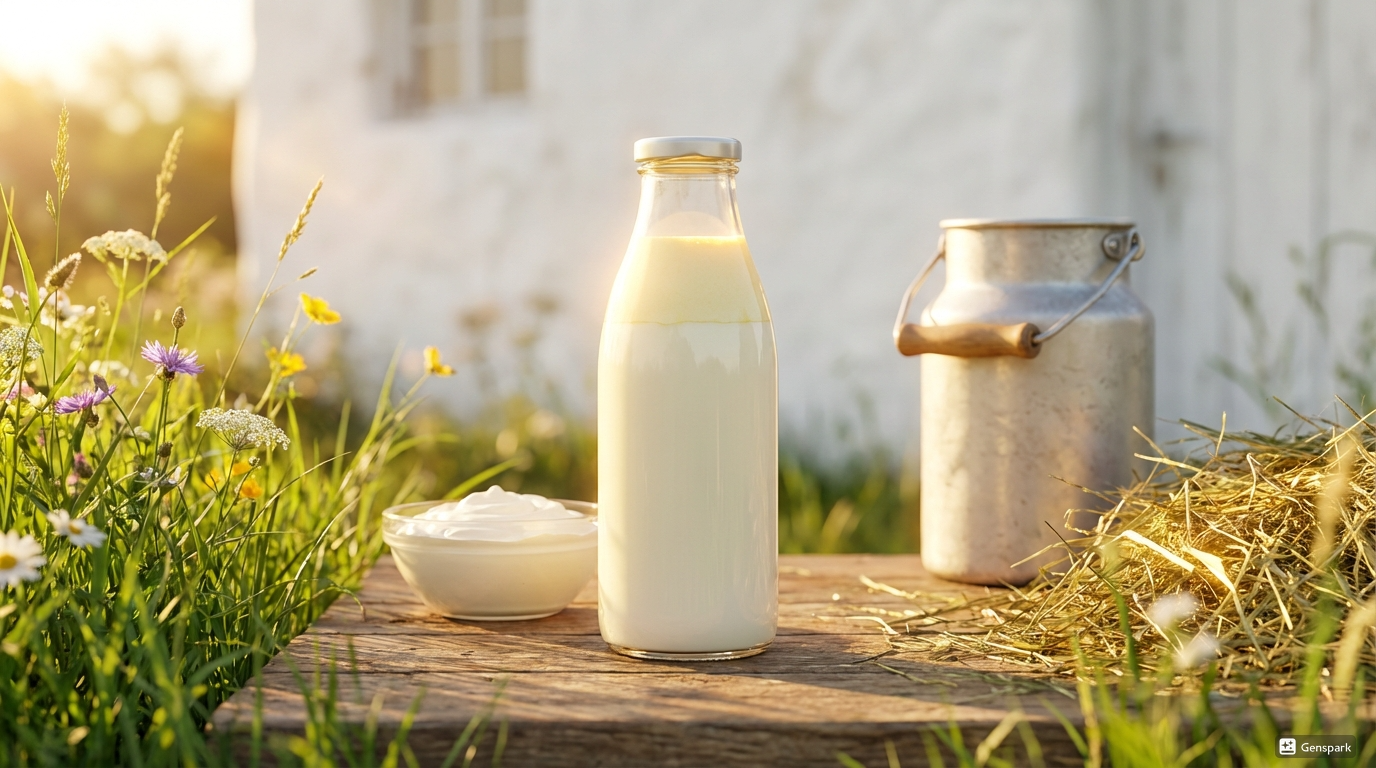
Do you remember the first time you saw a bottle of milk that looked… different? Maybe it was at a local farmers’ market or a high-end grocery store. It wasn’t that uniform, stark white liquid we grew up seeing in plastic jugs. Instead, it had a beautiful, golden layer resting peacefully at the top of the glass bottle.
That, my friends, is cream top milk. It’s milk the way nature intended it to be, before modern industrial processing decided that convenience was more important than character.
There is a certain magic to grabbing a cold glass bottle from the fridge. You have a choice to make: do you shake it vigorously to mix that rich goodness back in? Or do you carefully spoon off that decadent layer of cream for your morning coffee? It’s an experience, a ritual, and frankly, a taste that homogenized milk just can’t compete with.
In this guide, we’re going to peel back the label on non-homogenized milk. We’ll explore the science, the health benefits that enthusiasts swear by, and why this “old-fashioned” dairy staple is making a massive comeback in modern kitchens. Grab a cookie; you’re going to want some milk with this.
What is Cream Top Milk? 🥛
Let’s start with the basics. If you are looking for a featured snippet answer, here it is:
✨ The Definition
Cream top milk (often called creamline milk or non-homogenized milk) is pasteurized milk that has not undergone the homogenization process. In natural whole milk, fat globules are less dense than the water content. Left undisturbed, these fat globules float upward, creating a visible, distinct layer of cream at the top of the bottle. It requires shaking before serving to redistribute the fat, or the cream can be scooped off for other uses.
Unlike raw milk, cream top milk you find in stores is usually pasteurized to kill harmful bacteria. The key difference lies purely in the texture and the physical structure of the fat. It’s the closest you can get to farm-fresh milk while still adhering to modern safety standards.
The Science Behind Non-Homogenized Milk 🧬
So, why does the cream rise? It’s simple physics. Milk is essentially an emulsion of butterfat globules in a water-based fluid. Fat is lighter (less dense) than water. Think of it like a vinaigrette dressing; if you leave it sitting on the counter, the oil eventually floats to the top.
In the udder of a cow, the milk is warm and constantly moving. But once it settles in a pail or a bottle, gravity takes over. The large fat globules cluster together and drift upward.
This natural separation is the hallmark of minimal processing. When you buy a bottle of creamline milk, you are seeing physics in action. That separation isn’t a flaw; it’s a feature. It indicates that the fat structure hasn’t been obliterated by high-pressure machinery.
Cream Top vs. Homogenized Milk: The Smackdown 🥊
To understand the beauty of the cream top, we have to look at its nemesis: homogenization. Most milk in the US is homogenized. But what does that actually mean?
The Homogenization Process
Homogenization is a mechanical process, not a chemical one. Milk is forced through tiny, microscopic holes at extremely high pressure. This violence smashes the fat globules into tiny particles—so small that they lose their buoyancy and stay suspended in the liquid forever.
The result? Uniform white milk that never separates. Convenient? Sure. But many argue it comes at a cost to flavor and texture.
The Cream Top Difference
With non-homogenized milk, the fat globules are left intact. This results in a mouthfeel that is often described as silky or velvety but distinct from the “flat” creaminess of homogenized milk. When you shake cream top milk, you are creating a temporary suspension, which feels different on the tongue—richer, somehow.
Health Benefits & Nutritional Value 🌿
Is cream top milk healthier? This is a hot topic. While the macronutrients (calories, protein, calcium) are generally the same between whole homogenized and whole non-homogenized milk, the structure of those nutrients matters.
Easier Digestion?
Many people who report mild sensitivity to standard grocery store milk find they can tolerate cream top milk better. Why? One theory is that the fat globules in non-homogenized milk are in their natural state. When fat is homogenized, the protective membrane around the fat globule is broken, and proteins (like casein) adhere to the fat particles.
Some researchers suggest that these altered fat-protein structures might be harder for our digestive systems to process, potentially triggering inflammation or digestive upset in sensitive individuals. While scientific consensus is still evolving, the anecdotal evidence from thousands of dairy lovers is hard to ignore.
Nutrient Absorption
Milk fat is crucial for absorbing fat-soluble vitamins like Vitamin A, D, E, and K. Because cream top milk is almost always whole milk (you can’t have a cream top without the fat!), it ensures you are getting the vehicle necessary to absorb the vitamins inherent in the dairy.
Best Ways to Use Cream Top Milk 🍳
Buying a bottle of this liquid gold opens up culinary possibilities that standard milk just can’t touch. Here is how I like to use it:
- The “Barista” Scoop: Don’t shake the bottle immediately. Open it fresh and spoon that thick plug of cream directly into your morning coffee. It’s better than half-and-half.
- Homemade Butter: If you collect the cream tops from a few bottles, you can churn your own small batch of cultured butter.
- Rich Yogurt: Making homemade yogurt with cream top milk yields a layer of “custard” on top of the yogurt that is absolutely divine.
- Baking: The higher fat content (if you don’t shake it perfectly) can add incredible moisture to scones and biscuits.
Environmental & Sustainability Benefits 🌍
Choosing cream top milk is often a vote for sustainable agriculture. Why? Because the vast majority of non-homogenized milk comes from smaller, local creameries rather than massive industrial dairy conglomerates.
These producers are more likely to use glass bottles, which are washable and reusable, keeping thousands of plastic jugs out of landfills. Furthermore, because the milk is less processed, it requires slightly less energy to produce (skipping the high-pressure homogenization step).
Most creamline milk brands also prioritize grass-fed dairy practices. Cows grazing on pasture produce milk with higher levels of Omega-3 fatty acids and CLA (Conjugated Linoleic Acid), which are beneficial fats. It’s a win for the cow, the planet, and your body.
Frequently Asked Questions (FAQs) ❓
1. Is cream top milk the same as raw milk?
No, they are not the same, although they share some characteristics. Raw milk is milk that has never been pasteurized (heated) to kill bacteria. It comes straight from the cow to the bottle. Cream top milk refers specifically to the lack of homogenization.
Most cream top milk sold in grocery stores in the United States is pasteurized to meet federal safety regulations. It has been heated to kill pathogens but has not been mechanically processed to break up the fat globules. However, if you buy raw milk directly from a farm, it will also be cream top milk, because raw milk is inherently non-homogenized. Always check the label; if it says “Pasteurized,” it is not raw, even if the cream separates.
2. How do I drink cream top milk? Do I have to shake it?
There are two main schools of thought here, and both are correct! The most common method is to shake the bottle vigorously before opening. Because the cream plug can be quite thick, you might need to give it a really good workout to redistribute the fat back into the liquid. This gives you a consistent, rich whole milk experience.
The second method is the “chef’s choice.” Do not shake it. Open the bottle and use a spoon to scoop out the thick cream layer. You can use this cream for your coffee, tea, or cooking. The remaining milk in the bottle will be closer to skim or low-fat milk since the fat has been removed. It’s like getting two products in one bottle!
3. Why does cream top milk sometimes have chunks in it?
Don’t panic! Those “chunks” are usually just bits of pure butterfat (cream) that didn’t fully mix back in when you shook the bottle. It is not a sign that the milk has spoiled.
Because the fat globules in non-homogenized milk naturally cling together, they can form small clumps of butter, especially if the milk is very cold. If the milk smells fresh and sweet, those little white flecks are perfectly safe and delicious. In fact, they melt right into warm coffee or oatmeal. If the milk is sour or curdled (which looks different than fatty flakes), then it is spoiled, but simple fat separation is natural.
4. Is cream top milk higher in calories than regular whole milk?
generally, no. Cream top milk is whole milk, and the calorie count is comparable to homogenized whole milk, usually around 150-160 calories per cup.
However, there can be slight variations depending on the breed of the cow. For example, milk from Jersey or Guernsey cows (often used for premium cream top brands) naturally has a higher butterfat content than milk from the standard Holstein cows used in industrial dairy. While standard whole milk is 3.25% fat, some premium Jersey cream top milks can reach 4.5% or even 5% butterfat. This would make them slightly higher in calories, but also significantly more satiating and nutrient-dense.
5. Can I freeze cream top milk?
Technically, yes, you can freeze it, but it is not recommended if you care about texture. Freezing affects the emulsion of milk. With cream top milk, freezing can make the fat separation even more extreme and difficult to reintegrate.
Upon thawing, you might find the texture to be grainy or that the fat has separated into a waxy layer that won’t mix back in no matter how hard you shake it. It is perfectly safe to cook with or use in smoothies, but it might not be enjoyable to drink straight from a glass. If you must freeze it, leave some headspace in the bottle (liquids expand) and thaw it slowly in the refrigerator.
6. Why is cream top milk often sold in glass bottles?
Glass bottles are the traditional vessel for cream top milk for several reasons. First, they are non-porous and impermeable, meaning they don’t impart any “plastic” flavor to the milk, keeping the taste pure.
Second, glass is a better insulator than thin plastic, keeping the milk colder, which preserves freshness. Third, there is the visual appeal—producers want you to see that beautiful cream line! Finally, it is an environmental choice. Many local dairies operate a bottle return program where you pay a deposit, return the clean bottle, and they wash and reuse it. A single glass bottle can be reused dozens of times, significantly reducing plastic waste.
7. Does cream top milk taste different?
Absolutely. Most people describe cream top milk as having a cleaner, sweeter, and more “grassy” flavor compared to conventional milk. Because the fat hasn’t been pulverized, the milk feels lighter on the tongue initially but finishes with a rich, velvety coating.
Additionally, because cream top milk is often produced by smaller farms that practice grass-fed farming, the “terroir” of the pasture comes through. Depending on what the cows were eating (clover, rye, fresh grass), the flavor notes can change subtly with the seasons. Conventional homogenized milk is often blended from hundreds of farms to create a totally uniform, consistent (and some say boring) flavor.
8. Is cream top milk safe for toddlers?
Yes, pasteurized cream top milk is an excellent choice for toddlers (over 1 year old) who are transitioning from breast milk or formula to cow’s milk. Pediatricians generally recommend whole milk for toddlers because the high fat content is essential for brain development.
Cream top milk provides these healthy fats in a less processed form. Just be sure to shake the bottle well so your toddler gets a balanced ratio of milk and fat in their sippy cup. If you don’t shake it, one cup might be skim milk and the next cup pure cream! As always, consult your pediatrician, but generally, if they approve whole milk, cream top is a premium version of that.
9. Does cream top milk expire faster?
It depends on the pasteurization method, not the homogenization. Most cream top milk is pasteurized using the HTST (High Temperature Short Time) method, also known as “vat pasteurization” or standard pasteurization. This preserves the good bacteria and flavor but gives it a shelf life of about 2-3 weeks.
In contrast, much of the conventional organic milk in cartons is “Ultra-Pasteurized” (UHT), which cooks the milk at high heat to make it shelf-stable for months. While UHT lasts longer, it destroys the cream top capability (and flavor). So yes, fresh cream top milk usually has a shorter shelf life than UHT milk, but it is comparable to standard grocery store fresh milk. Once opened, it should be consumed within 5-7 days.
10. Why is the cream sometimes yellow?
A yellow tint in the cream layer is actually a badge of honor! It indicates that the cows have been grazing on fresh, green pasture.
Grass is rich in beta-carotene (the same stuff that makes carrots orange). Cows store this pigment in their fat. Because cream top milk concentrates that fat at the top of the bottle, the beta-carotene becomes visible as a golden or yellow hue. Conventional grain-fed cows typically produce whiter fat because their diet lacks these fresh greens. So, if your cream top is yellow, you know you are getting a boost of antioxidants and vitamins!
Conclusion: Shake It Up! 🏆
Switching to cream top milk is more than just a dietary change; it’s a lifestyle shift. It’s about choosing flavor over convenience, nature over processing, and local farmers over industrial giants.
Whether you pour it over your cereal, froth it for a latte, or just drink it straight from a cold glass, non-homogenized milk offers a richness that reconnects us with our food. It reminds us that milk is a seasonal, natural product, not just a white liquid commodity.
So next time you are in the dairy aisle, look for the glass bottle. Look for that golden line of cream. Take it home, give it a good shake (or grab a spoon), and taste the difference for yourself. Your tastebuds—and your local farmer—will thank you.
Ready to taste the difference? Check your local farmers’ market for fresh creamline milk this weekend! 🐄