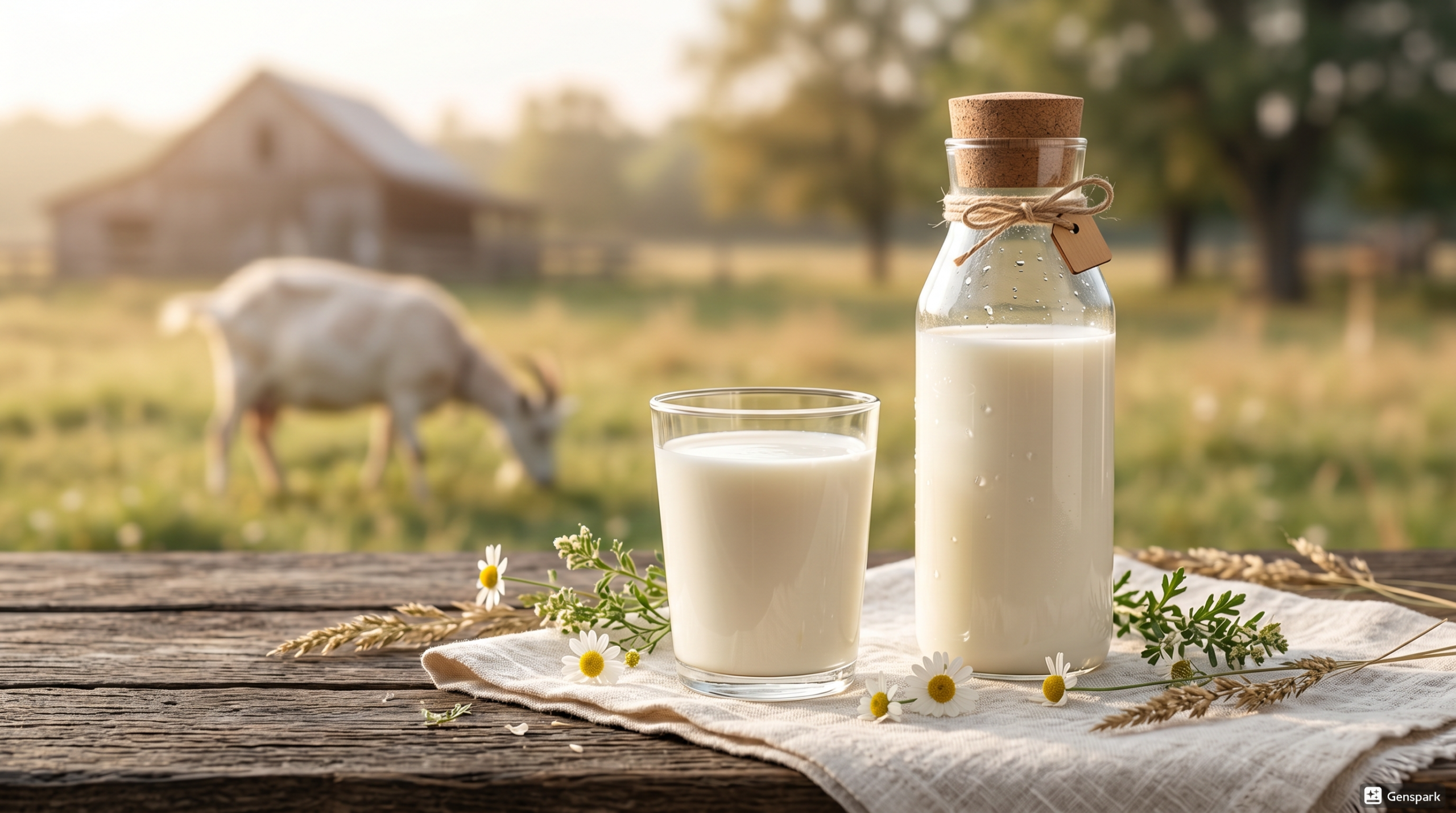
🥛 Goat Milk: Benefits, Nutrition, Uses, Risks, and Whether It’s Better Than Cow Milk
🌿 Introduction: Why Goat Milk Is Back in the Spotlight
Goat milk has quietly moved from niche farm kitchens to supermarket shelves, wellness blogs, and family breakfast tables. And honestly, it makes sense.
People are looking for foods that feel simpler, gentler, and closer to nature. Goat milk fits that story well. It has a creamy texture, a slightly tangy taste, and a nutrition profile that makes many people curious. Some choose it because cow milk upsets their stomach. Others love its richer mineral content. And some just want a different dairy option that feels a little less mainstream.
But is goat milk actually healthier? Is it easier to digest? Can everyone drink it safely? And is it really worth the extra price?
The short answer: goat milk can be a great choice for some people, but it is not automatically “better” for everyone. Like most foods, it shines when you understand what it offers, where it falls short, and how it fits into your diet.
In this guide, we’ll walk through goat milk nutrition, health benefits, goat milk vs cow milk, possible side effects, and the smartest ways to use it at home.
🐐 What Is Goat Milk?
Goat milk is exactly what it sounds like: milk produced by dairy goats. It has been consumed around the world for centuries and is actually more widely used globally than many people realize. Michigan State University Extension notes that worldwide, more people consume goat milk and goat milk products than cow milk products in many regions Source.
Unlike many trendy health foods, goat milk is not new. It is traditional, practical, and deeply rooted in food cultures across Europe, Asia, the Middle East, and Africa. What is new is the modern interest in its digestibility, nutrient density, and role as an alternative dairy choice.
The flavor is often described as creamy, slightly earthy, and a little more distinctive than cow milk. Some brands taste mild, while others have a stronger “goaty” finish depending on processing and freshness Source.
🧾 Goat Milk Nutrition at a Glance
One of the biggest reasons people turn to goat milk is its nutrient profile.
According to Michigan State University Extension, one cup of goat milk provides about 168 calories, 9 grams of protein, 10 grams of fat, 327 mg of calcium, 34.2 mg of magnesium, 271 mg of phosphorus, and 498 mg of potassium. Those numbers are generally higher than cow milk in several mineral categories Source.
Key nutrients in goat milk include:
- 🦴 Calcium
- 💪 Protein
- ⚡ Potassium
- 🧠 Phosphorus
- 🌿 Magnesium
- 👁️ Vitamin A
That matters because these nutrients support bone health, muscle function, hydration balance, nerve signaling, and general energy metabolism.
If you’re searching terms like goat milk nutrition, goat milk protein, goat milk calcium, or is goat milk healthy, this is the core answer: yes, goat milk is nutrient-dense and can absolutely be part of a balanced diet.
✅ 7 Evidence-Based Benefits of Goat Milk
1. It’s rich in minerals that support bones and muscles
Goat milk stands out for calcium, phosphorus, magnesium, and potassium. These are not trendy nutrients, but they are foundational. They help support bone structure, muscle contraction, hydration, and normal nerve function.
For adults who struggle to meet their calcium needs, goat milk can be a practical dairy source. One cup delivers more calcium than one cup of cow milk in the Michigan State comparison Source.
2. Some people find it easier to digest than cow milk
This is probably the most talked-about benefit.
Goat milk has smaller fat globules and is described as naturally homogenized, meaning the fat stays more evenly distributed. That may help explain why some people experience it as gentler on the stomach Source.
It also has slightly less lactose than cow milk, though not enough to make it lactose-free. So if you have true lactose intolerance, goat milk may still cause symptoms. But if your problem is more about digesting standard cow milk comfortably, goat milk may feel easier for you.
3. It provides high-quality protein
Each cup contains around 9 grams of protein, making it a strong option for satiety, muscle repair, and everyday nutrition Source.
That makes goat milk useful in breakfasts, smoothies, post-workout meals, and higher-protein meal plans.
4. It may work better for some people with cow milk sensitivity
This part needs nuance.
Some people who react poorly to cow milk tolerate goat milk better, and Michigan State notes that the difference may relate not only to lactose but also to different protein forms and slightly lower lactose content Source.
Still, goat milk is not safe for everyone with dairy allergy. If you have a medically diagnosed milk protein allergy, do not assume goat milk is automatically a safe substitute. Always check with a healthcare professional first.
5. It has a creamy taste that works well in cooking
Goat milk is not just about health claims. It’s also practical in the kitchen.
Its richness makes it useful in oatmeal, mashed potatoes, soups, sauces, yogurt, kefir, paneer-style preparations, and homemade desserts. If you like dairy with a fuller body, goat milk often feels more indulgent than the label suggests.
6. It can be a useful alternative in diversified diets
Many households today are mixing food choices rather than following one strict nutrition identity. Some drink cow milk, some use plant milk, and some rotate in goat milk. That flexibility can help people avoid food fatigue while keeping nutrient variety high.
Goat milk works especially well for people who want a real dairy option instead of a highly processed substitute.
7. Pasteurized goat milk offers dairy nutrition without raw milk risk
If you choose pasteurized goat milk, you get the nutritional benefits of milk without the added microbial risks associated with raw milk. The CDC says pasteurized milk offers the same nutritional benefits as raw milk while avoiding exposure to harmful germs Source.
That’s an important distinction, especially in online conversations where “raw” is often marketed as superior.
🥛 Goat Milk vs Cow Milk: Which Is Better?
The honest answer? It depends on what your body tolerates and what you value most.
Goat milk may be better if you want:
- Slightly less lactose
- More calcium, potassium, magnesium, and phosphorus
- A creamier texture
- A dairy option some people find easier to digest
Cow milk may be better if you want:
- A milder, more familiar taste
- Wider availability
- Lower cost
- More product choices in most grocery stores
Michigan State’s comparison shows goat milk is higher in calories, fat, protein, calcium, magnesium, phosphorus, and potassium, while cow milk is slightly higher in carbohydrates and sugar Source.
So when people ask “Is goat milk better than cow milk?”, the smarter answer is this:
Goat milk is not universally better. It is simply better suited for some people, preferences, and digestion patterns.
⚠️ Is Goat Milk Safe for Everyone?
No. And this is where responsible content matters.
Infants under 1 year should not drink pure goat milk
Cleveland Clinic states that pure goat milk is unsafe for infants under 12 months and can lead to serious health problems including hyponatremia, folate deficiency-related megaloblastic anemia, allergic reactions, and infection risks if not properly handled Source.
This is one of the most important facts in the entire topic. If you remember only one caution from this article, let it be this: pure goat milk is not a safe replacement for infant formula or breast milk in babies under one year old Source.
Raw goat milk carries food safety risks
The CDC warns that raw milk can expose people to germs such as Campylobacter, Cryptosporidium, E. coli, Listeria, Brucella, and Salmonella. Children, older adults, pregnant women, and immunocompromised people are at higher risk of severe illness Source.
So if you drink goat milk, choose pasteurized unless a licensed healthcare professional has given you a very specific reason not to.
People with dairy allergy should be careful
If you have a true milk protein allergy, goat milk may still trigger reactions. Tolerating cow milk poorly does not automatically mean goat milk will be safe.
🍽️ Best Ways to Use Goat Milk
One of the nicest things about goat milk is how easy it is to fit into everyday life.
You can use it in:
- ☕ Coffee and tea
- 🥣 Oatmeal and cereal
- 🍌 Smoothies
- 🍲 Cream soups
- 🥞 Pancakes and baking
- 🍨 Custards and puddings
- 🧀 Goat yogurt and goat cheese recipes
If you’re trying it for the first time, start simple. Use it in coffee, porridge, or a smoothie before drinking a full glass. That gives your taste buds time to adjust.
🛒 How to Choose the Best Goat Milk
Look for these basics:
- ✅ Pasteurized
- ✅ Fresh, refrigerated, and properly sealed
- ✅ Plain and unsweetened if you want fewer additives
- ✅ Fortified versions if you want added vitamin D
- ✅ Reputable local or national brands with clear labeling
If the smell is unusually strong or the container looks mishandled, skip it. Freshness matters more with goat milk because flavor can shift quickly.
🔍 Featured Snippet Answer: Is Goat Milk Healthy?
Yes, goat milk is healthy for many people because it provides protein, calcium, potassium, magnesium, phosphorus, and vitamin A. Some people also find it easier to digest than cow milk due to its smaller fat globules and slightly lower lactose content. However, it is not safe for infants under 1 year in pure form, and raw goat milk carries food safety risks. Source Source Source
💬 Final Thoughts
Goat milk is not magic. But it is genuinely useful.
It offers a solid nutrient profile, a creamy texture, and a real-food alternative for people who want to move beyond the usual dairy routine. For some, it feels easier on digestion. For others, it’s simply a delicious way to get more calcium and protein.
The smartest way to think about goat milk is not as a miracle drink, but as an option. A good one. Sometimes even an excellent one.
Choose pasteurized goat milk, pay attention to how your body responds, and remember that “different” does not always mean “better for everyone.”
That balance is where good nutrition usually lives.
❓10 FAQs About Goat Milk
1. Is goat milk healthier than cow milk?
Goat milk can be healthier for some people, but not in every situation. It tends to contain more calcium, magnesium, phosphorus, potassium, fat, and slightly more protein per cup than cow milk in the Michigan State comparison. That makes it attractive if you’re focused on mineral intake and satiety. At the same time, cow milk is often cheaper, milder in taste, and easier to find. So the better choice depends on your digestion, budget, flavor preference, and overall diet rather than a one-size-fits-all rule Source.
2. Is goat milk easier to digest?
Many people report that goat milk feels easier to digest, and there are reasons that may explain that experience. Goat milk has smaller fat globules and is described as naturally homogenized, which may help it move through digestion differently than cow milk. It also contains slightly less lactose. But “easier to digest” does not mean “safe for everyone.” If you have lactose intolerance, you may still react. If you have milk allergy, you should be especially cautious Source.
3. Does goat milk contain lactose?
Yes, goat milk does contain lactose. It is not lactose-free. However, Michigan State notes that it has about 1% less lactose than cow milk, which may make a difference for some people with mild sensitivity. Still, if you have diagnosed lactose intolerance, you should not assume goat milk will solve the problem completely. Some people do better with it, while others still experience bloating, gas, or discomfort Source.
4. Can babies drink goat milk?
Pure goat milk should not be given to babies under 12 months of age. Cleveland Clinic explains that it can be unsafe and may contribute to serious issues such as hyponatremia, folate deficiency-related megaloblastic anemia, allergic reactions, and infection risk. This is a major safety point. Goat milk formula is a separate product and should never be confused with plain goat milk. For infant feeding decisions, parents should rely on pediatric guidance and regulated infant nutrition products, not homemade substitutes Source.
5. Is raw goat milk safe?
Raw goat milk is not considered safe by public health authorities. The CDC warns that raw milk can carry dangerous germs including E. coli, Salmonella, Listeria, Campylobacter, Cryptosporidium, and Brucella. These infections can lead to severe symptoms such as vomiting, diarrhea, cramps, kidney complications, or worse in vulnerable people. Pasteurized goat milk offers the same basic nutrition without those added risks, which is why it is the safer everyday choice Source.
6. What does goat milk taste like?
Goat milk usually tastes creamier and slightly tangier than cow milk. Some people notice a mild earthy note, while others find it surprisingly smooth. Flavor varies based on freshness, handling, breed, feed, and pasteurization method. If someone says they hate goat milk, there’s a good chance they had a stronger-tasting version. Many commercial brands are much milder than the old-fashioned farm-style flavor people imagine Source.
7. Is goat milk good for weight loss?
Goat milk can fit into a weight-loss diet, but it is not a weight-loss food by itself. It contains protein and fat, which may help with fullness, but it also has calories. One cup of goat milk has about 168 calories in the Michigan State comparison. If it helps you stay satisfied and avoid ultra-processed snacks, it can support your goals. If you drink it mindlessly on top of an already high-calorie diet, it won’t. Context matters more than hype Source.
8. Can people with cow milk allergy drink goat milk?
Sometimes, but not safely by assumption. Some people who do poorly with cow milk tolerate goat milk better because of differences in protein structure and lactose content. But others can still react. If your issue is a medically confirmed milk protein allergy, you should not test goat milk casually at home. Allergy decisions should be made with a qualified healthcare professional because reactions can be serious Source.
9. Is goat milk good for bones?
Yes, goat milk can support bone health because it provides calcium and phosphorus, two major minerals involved in bone structure. It also contains magnesium, which plays a supporting role in bone metabolism. While no single food builds strong bones on its own, goat milk can absolutely be part of a bone-friendly diet alongside resistance exercise, vitamin D, and overall adequate protein intake Source.
10. How should I start drinking goat milk if I’ve never tried it before?
Start small and make it easy on yourself. Try goat milk in coffee, tea, oatmeal, or a smoothie before drinking a full cold glass. That softens the flavor transition and helps you notice how your body responds. Choose a pasteurized, fresh, plain version from a reputable brand. If you enjoy creamy dairy but want something different from cow milk, goat milk often grows on people quickly once they try it in familiar foods. For safety, avoid raw versions unless specifically advised by a professional, and never use pure goat milk for infants Source Source.
1 thought on “Goat Milk: Benefits, Nutrition, Uses, Risks, and Whether It’s Better Than Cow Milk”