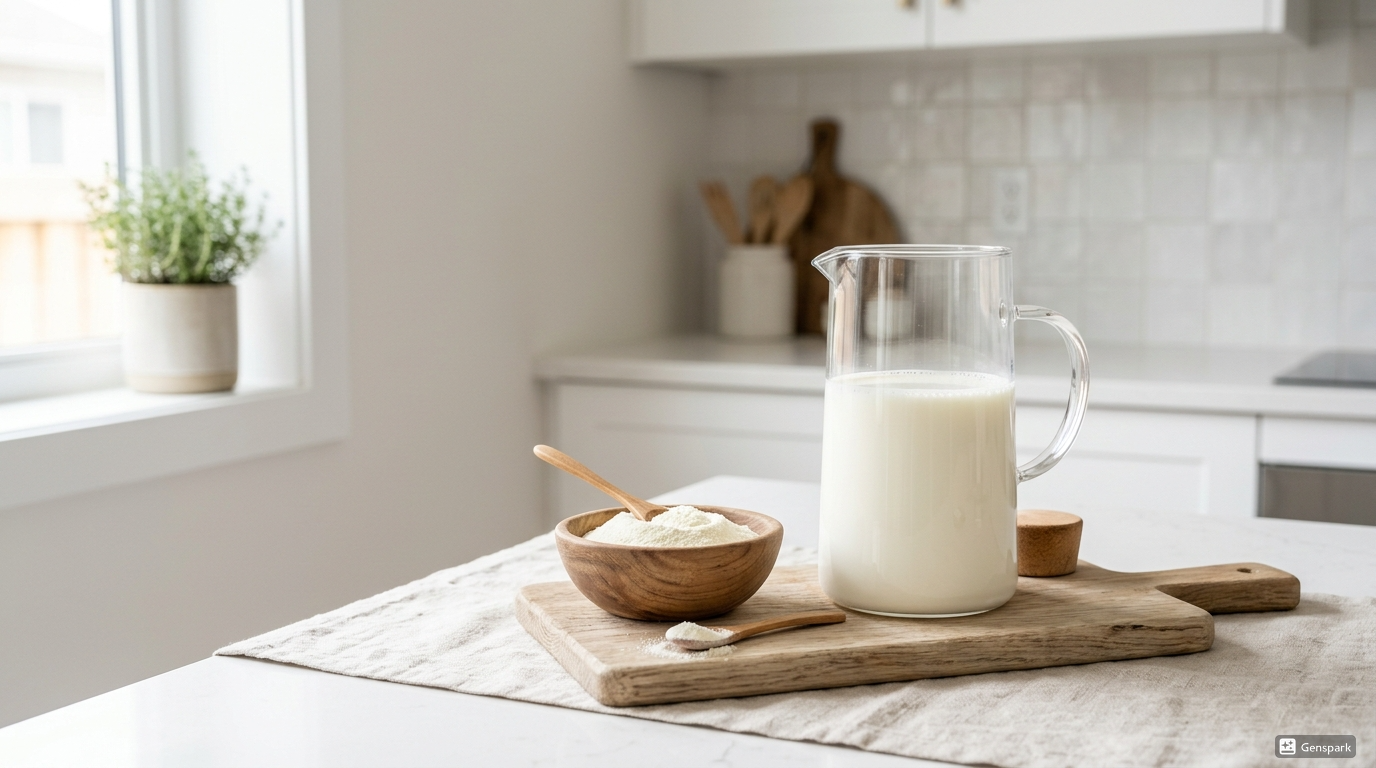
🥛 Milk Powder to Milk: The Simple Guide to Mixing It Right, Making It Taste Better, and Using It Smartly
There’s something almost old-school comforting about milk powder.
It sits quietly in the pantry, doesn’t complain, lasts far longer than fresh milk, and somehow becomes incredibly useful the moment your fridge is empty. Maybe you ran out of milk before breakfast. Maybe you’re stocking up for emergencies. Or maybe you just want a practical, budget-friendly dairy option that doesn’t go bad in three days.
Whatever brought you here, the good news is this: turning milk powder to milk is easy. The trick is doing it in a way that gives you the best taste, texture, and storage life.
And honestly, that’s where most people go wrong.
They stir too fast, use the wrong ratio, drink it immediately, or expect it to taste exactly like fresh whole milk. Then they decide powdered milk “isn’t good.” But when it’s mixed properly and chilled well, it can be surprisingly useful for drinking, baking, cooking, smoothies, coffee, and food storage.
Let’s walk through it like a real kitchen conversation — no fluff, no robotic filler, just practical help.
✨ Quick Answer: How Do You Turn Milk Powder Into Milk?
To make milk powder to milk, mix the powder with clean water according to the package instructions. A common household ratio for nonfat dry milk is 1/3 cup powder to 1 cup water. For better texture, whisk thoroughly, let it rest for 30 to 60 minutes, and chill before drinking. Source
🧂 What Does “Milk Powder to Milk” Actually Mean?
“Milk powder to milk” simply means reconstituting dried milk powder with water so it becomes liquid milk again.
Milk powder is made by removing almost all the water from milk. That’s why it lasts much longer in storage. When you add water back in, you’re basically rebuilding it into drinkable milk.
This sounds simple — and it is — but the final result depends on three things:
First, the type of milk powder you’re using.
Second, the mixing ratio.
Third, how patient you are after mixing.
Yes, patience matters. Reconstituted milk tastes better when it has time to settle and chill. Missouri Extension specifically notes that resting the milk for 30 to 60 minutes helps the flavors blend, and refrigerating it improves the drinking experience. Source
📏 Milk Powder to Milk Ratio: The Most Useful Chart
If you’re using standard nonfat dry milk, this is one of the most practical ratio guides:
| Liquid Milk Needed | Water | Dry Milk Powder |
|---|---|---|
| 1/4 cup | 1/4 cup | 1 1/2 tablespoons |
| 1/3 cup | 1/3 cup | 2 tablespoons + 1 teaspoon |
| 1/2 cup | 1/2 cup | 3 tablespoons |
| 1 cup | 1 cup | 1/3 cup |
| 1 quart | 3 3/4 cups | 1 1/3 cups |
| 1 gallon | 15 1/2 cups | 5 1/3 cups |
These measurements are published by Missouri Extension and are especially helpful for cooking, baking, and batch prep. Source
One important note: always check your package label first. Different brands, instant powders, and whole milk powders can vary slightly.
🥄 How to Make Milk from Powder Without Clumps
Here’s the easiest method if you want better results.
Start with a clean jar, blender bottle, or pitcher. Add some of the water first instead of dumping everything in at once. Then add the milk powder gradually while whisking. Once it starts dissolving, add the remaining water and mix again.
A whisk or blender usually works better than a spoon. Missouri Extension specifically recommends using a whisk or blender to combine the powder thoroughly and avoid clumps. Source
After mixing, don’t drink it right away if you can avoid it.
Let it rest for about half an hour, then refrigerate it for a few hours. That one step makes a big difference. The flavor gets smoother, and the texture feels less “powdery.”
If you’ve ever said powdered milk tastes flat, this is usually the missing step.
😌 How to Make Powdered Milk Taste Better
Let’s be honest. The biggest complaint about reconstituted milk isn’t usually nutrition.
It’s taste.
Fresh milk has a naturally rounded flavor and creamy mouthfeel. Powdered milk can taste thinner, especially if it’s nonfat dry milk. But that doesn’t mean it has to taste bad.
A few simple things help:
Use cold water when possible.
Whisk thoroughly so the powder dissolves fully.
Let it rest and chill before serving.
Shake before pouring if any solids settle.
Use it in coffee, tea, oatmeal, pancakes, smoothies, or sauces if you don’t love it plain.
That last point matters. Powdered milk shines in recipes. In fact, extension guidance highlights dry milk as useful for soups, sauces, mashed potatoes, cereals, baked goods, and smoothies. Source
So if plain drinking milk isn’t your favorite use, that’s okay. You still have plenty of practical ways to use it well.
💪 Is Powdered Milk Nutritious?
In many cases, yes.
Powdered milk can still provide important nutrients associated with milk, including protein, calcium, potassium, phosphorus, riboflavin, and vitamin B12. Harvard’s Nutrition Source also notes that milk is commonly fortified with vitamin A and vitamin D during processing. Source
North Dakota State University Extension also describes dry milk as a good source of protein, calcium, and vitamins A and D, while emphasizing its versatility and long shelf life. Source
That said, not all powdered milk is identical.
Some are nonfat. Some are whole milk powder. Some are fortified. Some are designed more for baking than for drinking. So the smartest move is always to read the nutrition label on the specific product you buy.
If you’re comparing powdered milk vs fresh milk, the big differences are usually flavor, texture, and fat content — not whether it can be useful nutritionally.
🥛 Powdered Milk vs Fresh Milk: Which Is Better?
This is where the answer gets more human.
Fresh milk usually wins on taste.
Powdered milk wins on convenience.
Fresh milk is ideal when you want creamy texture, instant use, and a familiar flavor. Powdered milk is ideal when you want shelf stability, pantry backup, travel convenience, emergency storage, or something you can use in recipes without worrying about spoilage.
It’s not really a battle. It’s more like choosing the right tool for the day.
If your fridge is stocked and you use milk fast, fresh milk makes sense.
If you hate waste, like buying in bulk, cook often, or want a backup dairy option at home, powdered milk is incredibly practical.
And for many households, the smartest move isn’t one or the other. It’s both.
⏳ How Long Does Milk Powder Last?
This is one of the biggest reasons people buy it.
According to Utah State University Extension, the shelf life of packaged nonfat dry milk can range from about 3 months to 3 to 5 years, and storage temperature is one of the biggest factors affecting how long it lasts. Cooler storage supports longer shelf life. Source
That’s a huge advantage over fresh milk.
But once you turn milk powder to milk, the rules change. Missouri Extension advises storing reconstituted milk in the refrigerator and using it within 5 to 7 days. Source
So think of it this way:
The powder is the long-term pantry hero.
The prepared milk is still a perishable food.
🧊 Best Storage Tips for Reconstituted Milk
Once mixed, treat it like regular milk.
Store it in a tightly closed container. Keep it refrigerated. Shake before pouring if separation happens. Don’t leave it sitting out on the counter for hours.
If you want better taste over the next day or two, use a container with a tight lid and chill it well. That reduces odor absorption from the fridge and helps the texture stay more even.
If you only need a little, mix a little.
That’s one of the best habits with powdered milk. Instead of preparing a full jug, prepare only what you’ll use for breakfast, coffee, cereal, or a single recipe.
Less waste. Better freshness. Less disappointment.
🍞 Best Everyday Uses for Milk Powder to Milk
This is where powdered milk becomes surprisingly brilliant.
You can use reconstituted milk in:
- tea and coffee
- cereal and oatmeal
- pancakes and waffles
- soups and sauces
- mashed potatoes
- smoothies
- bread, muffins, and cakes
- macaroni and cheese
- emergency pantry cooking
Missouri Extension also notes that dry milk can improve texture in baked foods and help with browning, while NDSU highlights its value for travel and situations without refrigeration. Source Source
In other words, even if you never become a “drink powdered milk by the glass” person, it can still earn a permanent place in your kitchen.
⚠️ Common Mistakes People Make
The first mistake is using the wrong ratio.
The second is mixing lazily and expecting smooth milk.
The third is drinking it immediately and deciding the flavor is bad.
The fourth is forgetting that different powders behave differently. Nonfat dry milk, whole milk powder, and instant varieties can all feel a little different in the glass.
And the fifth mistake is storing prepared milk carelessly.
If you avoid those five things, your results get much better very quickly.
🧠 EEAT-Friendly Takeaway: Is Milk Powder Worth Keeping at Home?
Honestly? Yes.
Not because it replaces fresh milk perfectly.
But because it solves real-life problems.
It helps when groceries run low. It reduces waste. It supports emergency food storage. It works in baking and cooking. It can save a morning when the cereal is poured and the carton is empty.
That’s why powdered milk keeps surviving trends. It isn’t glamorous, but it’s dependable.
And in everyday kitchens, dependable wins.
❓10 FAQs About Milk Powder to Milk
1. What is the correct milk powder to milk ratio for everyday use?
For many standard nonfat dry milk products, a very common household ratio is 1/3 cup dry milk powder to 1 cup water. Missouri Extension publishes this as a practical reference for reconstituting dry milk at home. Smaller measurements are also available if you only need a little at a time. Still, it’s important to check the package because brand formulas can vary. If you want the best result, mix thoroughly with a whisk or blender, let it rest, and chill before serving. That way, you’re not just making milk — you’re making it taste better too. Source
2. Does powdered milk taste the same as fresh milk?
Usually not exactly, and that’s normal. Fresh milk tends to taste creamier and more rounded, especially if it contains more fat. Powdered milk, especially nonfat dry milk, can taste lighter and a little flatter if it’s mixed and served immediately. The good news is that taste improves when you use cold water, whisk well, let it rest, and refrigerate it before drinking. Many people also prefer using powdered milk in coffee, baking, sauces, oatmeal, or smoothies rather than drinking it plain.
3. Is powdered milk healthy to drink every day?
It can be, depending on the product and your overall diet. Milk and milk-based powders can provide useful nutrients such as protein, calcium, potassium, phosphorus, riboflavin, and vitamin B12, and many milk products are fortified with vitamins A and D. The exact nutrition depends on whether the powder is nonfat, whole, fortified, or flavored. So daily use can fit well into many diets, but the smartest move is to check the specific label and choose the type that matches your nutritional goals. Source Source
4. How long does reconstituted powdered milk last in the fridge?
Once you turn milk powder into liquid milk, it should be treated like fresh milk. Missouri Extension advises storing reconstituted milk in a tight container in the refrigerator and using it within 5 to 7 days. In real life, many people prefer making smaller batches more often so the taste stays fresher. If you notice off smell, separation that doesn’t resolve after shaking, or any sign of spoilage, it’s better to discard it. Source
5. How long does unopened milk powder last in storage?
Shelf life can be dramatically longer than fresh milk. Utah State University Extension notes that packaged nonfat dry milk may last from around 3 months to 3 to 5 years, with storage temperature playing a major role. In simple terms, cool and dry storage helps. Heat shortens shelf life. So if you’re buying powdered milk for pantry backup or emergency food storage, keep it sealed, dry, and away from warm areas like garages or cabinets near the stove. Source
6. Can I use milk powder instead of fresh milk in recipes?
Yes — and this is actually one of the best uses for it. Dry milk works well in pancakes, muffins, breads, soups, sauces, mashed potatoes, cereals, and smoothies. Missouri Extension even notes that dry milk can improve texture in baked goods and support browning. In many recipes, you can add the powder to dry ingredients and the water separately, or you can reconstitute it first and use it like regular milk. For busy kitchens, it’s one of the easiest ways to avoid running to the store for “just one cup of milk.” Source
7. Why is my powdered milk lumpy or gritty?
Usually because it wasn’t dissolved properly. A spoon often isn’t enough. A whisk, shaker bottle, or blender gives much better results. It also helps to add the powder gradually instead of dumping it all into water at once. Another overlooked trick is letting the mixture sit before drinking. That rest time gives the powder a chance to hydrate fully, which improves mouthfeel and reduces that sandy or chalky sensation people often complain about.
8. Which is better: whole milk powder or nonfat dry milk?
It depends on what you want. Whole milk powder usually gives a richer, creamier flavor and feels closer to fresh milk. Nonfat dry milk is often more common for storage, cooking, and long shelf life. If your priority is drinking quality, you may prefer whole milk powder. If your priority is shelf stability, lower fat, pantry backup, or baking, nonfat dry milk may suit you better. There isn’t one universal winner — just a better fit for your kitchen habits.
9. Is powdered milk good for emergency storage?
Yes, and that’s one of its strongest advantages. Because most of the water has been removed, powdered milk is shelf-stable and much easier to store long term than fresh milk. Utah State University Extension specifically identifies nonfat dry milk as suitable for short- and long-term emergency food storage, with longer shelf life supported by cool storage conditions. For emergency prep, it’s smart because it gives you a dairy option without constant refrigeration before opening. Source
10. Can I make only a small amount instead of a full pitcher?
Absolutely, and in many homes that’s actually the best approach. If you only need enough for coffee, cereal, oatmeal, or one recipe, mixing one cup or even half a cup saves waste and improves freshness. The ratio chart from Missouri Extension makes small-batch prep easy, so you don’t have to commit to a large jug every time. This is especially helpful if you’re still getting used to the taste or using powdered milk only occasionally. Source
🌿 Final Thoughts
Turning milk powder to milk isn’t complicated, but doing it well makes all the difference.
Use the right ratio. Mix it properly. Let it rest. Chill it. Store it like fresh milk. And if you don’t love it by the glass, use it in recipes where it quietly does its job beautifully.
That’s really the secret.
Powdered milk doesn’t need to be perfect. It just needs to be practical, reliable, and ready when you need it.
And most of the time, that’s exactly what it is.